Reduce diesel dependency.
Monitor what no one else can reach.
Remote mining sites, off-grid operations and isolated infrastructure face a common challenge — chronic diesel dependency, extreme climate conditions and no early warning system. Velox tracks energy resilience and climate risk in real time, thousands of kilometres from the nearest service centre.
Diesel at $1.50/litre. 800km from the nearest depot.
No early warning system.
For remote mining and industrial sites, energy is the single biggest operational cost — and the single biggest vulnerability. Diesel represents 40–60% of operating expenses for off-grid sites. A single extreme weather event can halt operations for days.
The questions your site manager
needs answered every morning.
"How long can this site run without diesel refuel?"
ERS™ tracks energy coverage, battery autonomy and grid reliability in one score — updated every 4 hours. For off-grid sites, it answers the critical question before the situation becomes an emergency.
"How dependent on diesel is this site right now?"
DFI™ flags critical diesel dependency before operations are at risk. Combined with ERS™, it gives site managers and logistics teams the lead time needed to schedule resupply.
"Is this site operating within normal parameters?"
AHS™ aggregates climate exposure and infrastructure health into a 0–100 score. When it drops to Watch or Alert, one recommended action tells your team what to do — no interpretation needed.
"How much diesel cost am I avoiding with clean energy?"
ECA™ tracks the financial and carbon value of energy produced by Velox hardware — kWh generated, diesel litres avoided, CO2 offset and monthly savings. Your ESG report writes itself.
"What is the long-term climate risk at this location?"
CES™ scores the structural climate exposure of the site — heat stress trends, flood risk, drought frequency, wildfire proximity. Essential for CSRD reporting and insurance.
"What is the wildfire risk around this site?"
WRI™ scores wildfire risk with 7-day forecast — critical for mining sites near vegetation in Mediterranean, semi-arid or tropical dry zones during dry season.
ERS 31 · Watch.
37.6L diesel/day. 6 hours of autonomy.
A remote site in Ethiopia. Energy coverage at 9%, battery autonomy 6 hours, grid reliability 35. DFI™ flags Critical Dependency at 85.3/100. The platform says: "Resilience at risk — verify battery charge level, check grid connection. Increase monitoring frequency."
Your logistics team gets this alert automatically — with enough lead time to schedule resupply before operations are at risk.
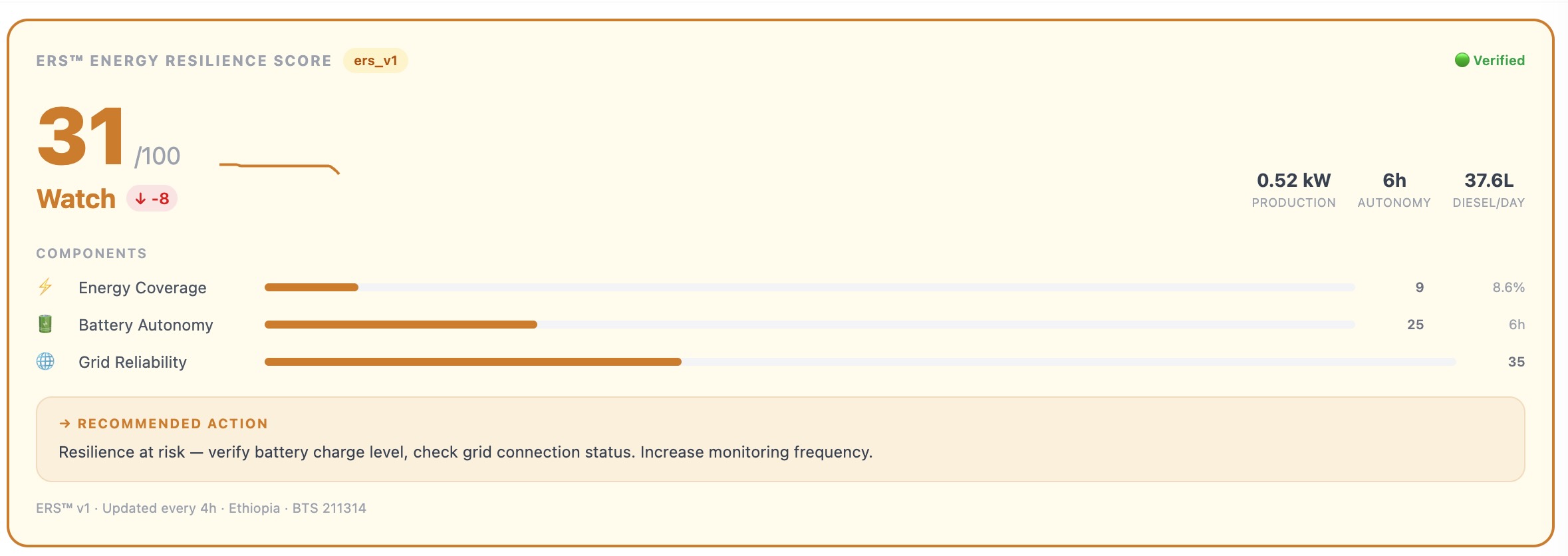
ERS™ + DFI™ · Remote site · Ethiopia
Replace diesel.
Report it automatically.
Velox hardware (Aeroleaf, WindBush, WindPalm) turns wind and solar energy into a direct diesel replacement — tracked in real time. Every kWh produced is a litre of diesel not burned, a tonne of CO2 avoided and a line item in your CSRD report.
For listed mining groups facing TCFD and CSRD obligations, Velox provides site-level climate risk data and energy transition metrics that are auditable, reproducible and compliant.
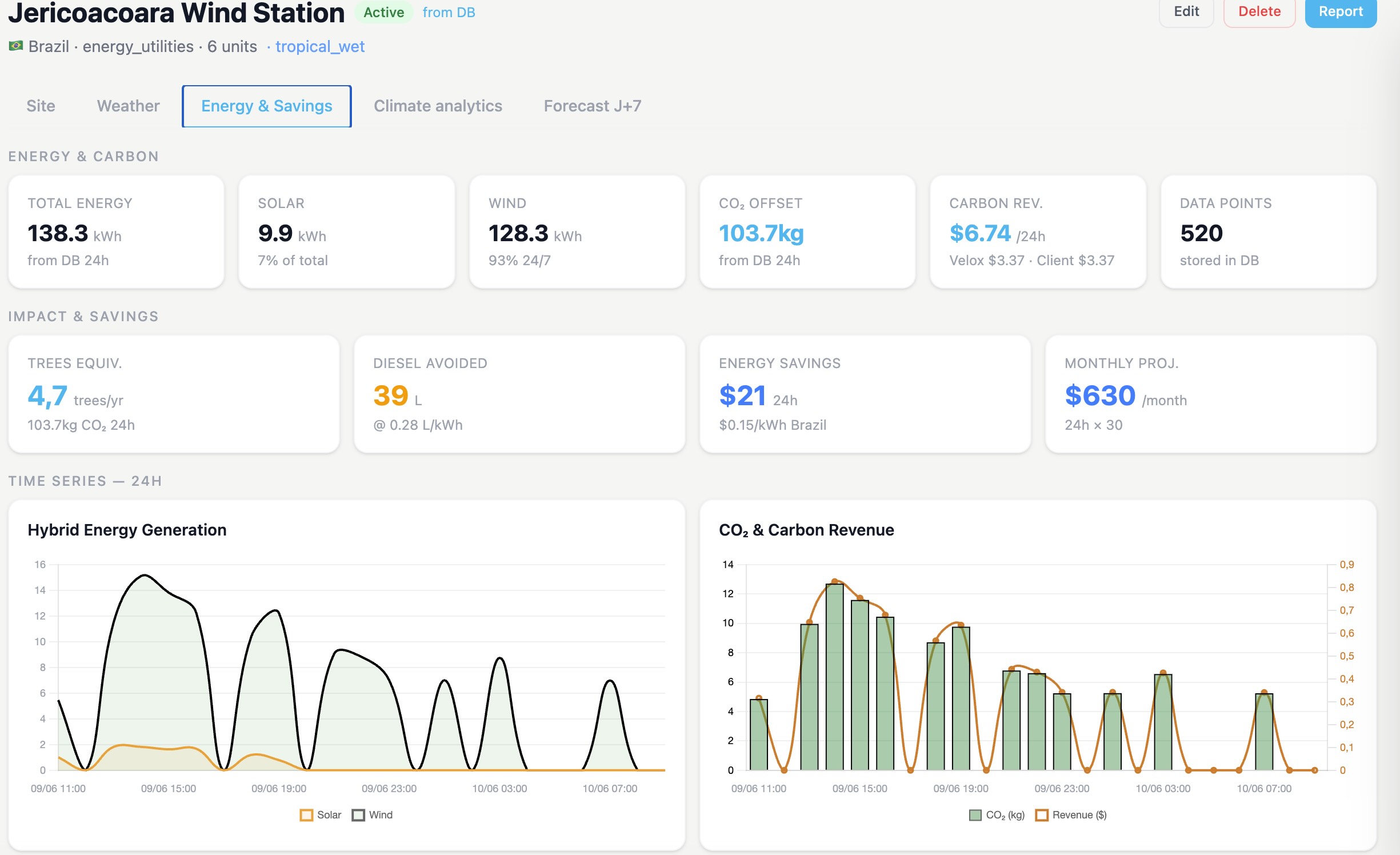
Energy & Savings · Remote wind station · Brazil
From a mine in West Africa
to a remote station in the Andes.
Tell us your site location and your energy setup. We show you ERS™, DFI™ and climate risk scores for your specific geography — within 48 hours.