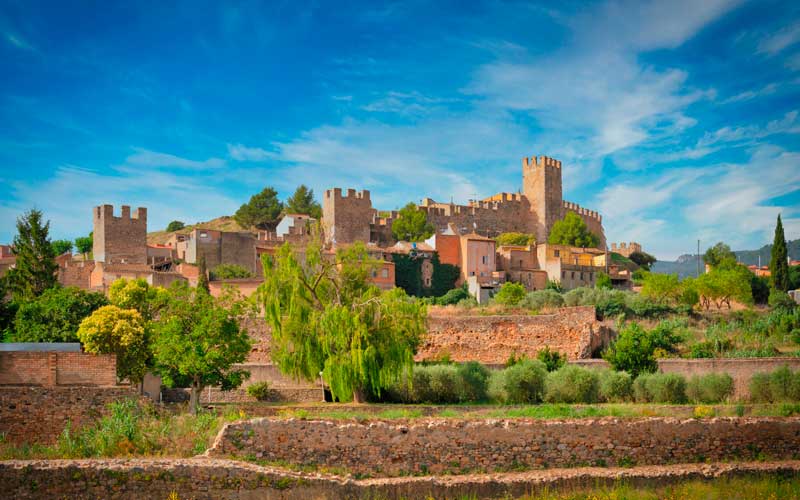
The Problem Facing Every Small Commune
Climate risk does not care about population size. A village of 3,000 inhabitants in Provence, the Var, the Languedoc or rural Catalonia faces the same threats as a major city — summer drought, wildfire risk, late frost, flash flooding, violent storms. The difference is in the resources available to respond.
A large city has a dedicated climate officer, a technical department, a real-time data platform and a crisis communication team. A village has a mayor, a handful of municipal employees, and a Météo-France app on a smartphone.
When risk builds through a July afternoon — temperature rising, humidity dropping, wind shifting — the mayor of a small commune has no way to know that their territory, specifically, is entering dangerous conditions. They find out when the fire is already visible on the hillside, when the flooding has already reached the road, when the frost has already killed the vines.
No system predicts every hailstorm. Hail and localised storms are too specific, too fast, too unpredictable. But Velox gives your commune something no regional forecast can — a real measurement of what is happening on your land, right now, compared to three years of local history.
What Changes When You Are Connected to Your Territory
The Velox approach is simple: place one or two measurement units on public land — a town hall square, a school courtyard, a park — and connect them to an alert system configured for your commune's specific risks.
These units measure temperature, humidity, atmospheric pressure, wind speed and direction, air quality and soil moisture — continuously, in real time, at your location. Not at the nearest regional weather station 40 kilometres away.
When the data crosses a threshold that matters for your commune — a frost risk, a wildfire risk index above a certain level, a pressure drop indicating an incoming storm — two things happen automatically.
The mayor is alerted
A direct email or SMS arrives on the mayor's phone, with a clear, plain-language description of the situation. No graphs, no scientific jargon. Just what is happening, what the risk is, and what it might mean for the commune's operations.
Residents are alerted
At the same time, registered residents receive a message on their phone — via SMS or WhatsApp — with practical guidance relevant to the specific risk. The mayor does not need to make any calls, draft any messages or take any action. The system handles communication automatically, based on rules defined in advance.
In the aftermath of a climate event, mayors are often asked: "Why weren't residents warned?" With an automated alert system, the answer is clear — they were. The communication is logged, timestamped and documented. That evidence matters for insurance claims, grant applications and public accountability.
Real Scenarios — What the Alerts Look Like
Scenario 1 — Wildfire risk in summer
Scenario 2 — Late frost alert for farmers
Scenario 3 — Heavy rainfall and road safety
Beyond Alerts — Three Practical Benefits for the Commune
Smarter irrigation of public green spaces
Municipal parks, sports grounds and roadside planting are typically watered on a fixed schedule — regardless of whether it rained the day before, whether rain is forecast tomorrow, or whether the soil is already saturated. This wastes water and money.
With real-time soil moisture data from Velox sensors, the commune's technical services can make irrigation decisions based on what the ground actually needs. In a typical southern French commune, this can reduce watering costs by 20 to 40 percent during summer months — a measurable saving that justifies itself to the municipal council.
Supporting local farmers
Many small communes have a significant farming community — vine growers, fruit farmers, market gardeners — who face growing climate exposure. Velox does not claim to predict every hailstorm or every localized event. Hail in particular is too fast and too geographically specific for any system to guarantee advance warning.
What Velox provides is reliable, continuous data on the variables that matter most for agricultural decisions:
- Frost alerts — protect crops, delay harvests, activate anti-frost systems in time
- Wind alerts — know when wind speed makes pesticide or treatment application unsafe or ineffective
- Drought indicators — soil moisture and evapotranspiration data to optimise irrigation schedules
- Heat stress alerts — protect livestock and outdoor workers during extreme heat periods
A commune that shares these alerts with its farming community provides a genuine service — one that strengthens the relationship between the mairie and the agricultural sector.
Clean energy for public spaces
Each Aeroleaf unit produces clean energy — modest in volume (300 to 600 watts per unit), but meaningful when directed at a specific public use. Street lighting near the town hall. A public information display. A charging point for electric bikes in the village square.
This visible production matters beyond the electricity saved. Citizens see it. School groups visit it. It makes climate action tangible — not a policy document, but a physical object in the public space, producing real energy from local wind and sun.
And for the commune's accounts, even a small reduction in electricity costs from public infrastructure is a real saving — documented, recurring, and eligible to support grant applications for further investment.
The same unit that powers your public lighting also monitors your territory's climate, alerts your residents when risk builds, helps your farmers protect their crops, and gives your technical services the data to manage green spaces more efficiently. This is what makes the Village Résilient package different from a simple weather station.
A Word on What Velox Can and Cannot Do
Honesty matters here. No system predicts every climate event with certainty. Hail is notoriously localised — a storm can hit one valley and completely spare the next. Localised thunderstorms can develop within minutes, faster than any alert system can reliably respond.
What Velox does reliably: measure conditions on your specific territory in real time, compare them to three years of local historical data, and alert you when conditions are moving into risk territory. This is substantially more useful than a regional forecast built on averages — and it gives you, the mayor, something to act on before events become crises.
What Velox does not replace: local knowledge, field experience, and human judgment. The system tells you that wildfire conditions are building. You decide whether to recall your teams from the forest edge.
Getting Started — Simpler Than You Think
A Velox deployment for a small commune typically takes four to six weeks from first contact to operational system. There is no IT infrastructure to build, no server to maintain, no technical team required. The units are installed by Velox and connected automatically. The dashboard is accessible from any browser — on a computer or a phone.
The hardware investment is eligible for ADEME climate resilience grants, European FEDER regional funds, national digital transition dotations and regional climate adaptation programs. Velox assists communes in identifying applicable programs and preparing grant documentation.
The annual subscription — €9,900 for the Essential plan — fits within the operational budget of most communes, typically classified as a digital services or climate risk management expense.
For the annual cost of a part-time municipal agent, a commune gets a complete climate risk early warning system — real-time ground measurements, automated alerts to residents and farmers, irrigation data, clean energy production, and documented evidence for grant applications.
The first step is a free territory assessment. Velox reviews the commune's geography, identifies the highest-risk zones, recommends sensor placement, and maps applicable funding sources. No commitment required.